Minedor — the 3D gold mine game
Minedor is the Gold Mine: dig your own galleries through a 100-level voxel mine, forge jewellery at the Jeweller’s, dress your miner at the Mine Boutique, adopt a companion and go unseat the Mine King. The game starts right here, in one click.
Free · No account · No ads · No download · Playable offline after your first visit
Fully playable in English — the flags at the top of the page switch the site and the game together.
A complete 3D mining game, straight in the browser
Minedor plays wherever you already are: no account, no install, no app store. You click Play, the 3D engine loads and the mine opens up — timbered galleries, rails on the floor, lanterns bolted to the walls and complete darkness at the end of the corridor. The camera stays behind your miner, inside the gallery, exactly like a mineshaft seen from within.
Every swing of the pickaxe breaks a section your own size: you are not drilling a finger-wide hole, you are opening a passage. The tunnels you dig are yours, they are added to the floor map, and they stay there — the whole world is grown from a seed saved with your game.
⛏️ Dig wherever you like
Rock gets harder as you go down: dirt, stone, hardrock (needs a Steel pickaxe), obsidian (Mithril). Your galleries are added to the map.
🗺️ Floor map and routing compass
M opens the floor plan. The compass does not point as the crow flies: it follows a walkable path and shows the real distance left.
🏕️ Fifteen camps, three shops each
At the foot of nearly every staircase: the merchant, the Jeweller, the Mine Boutique, a campfire that heals — and a perimeter no zombie ever enters.
💀 Zombies, spiders and four bosses
Three species of zombie, ceiling spiders, three landing bosses — the Gallery Dragon, the Ossuary, Auntie Slipper — and the Mine King at level 100. Every boss you defeat drops its trophy.
📴 Playable offline
After your first visit, Minedor starts without a connection and installs as an app straight from your browser.
🏆 World ranking
A worldwide top 10 with its podium, shown at the top of this page and in the game. Finish a run on Miner or King and write your name on it.
The mine in pictures
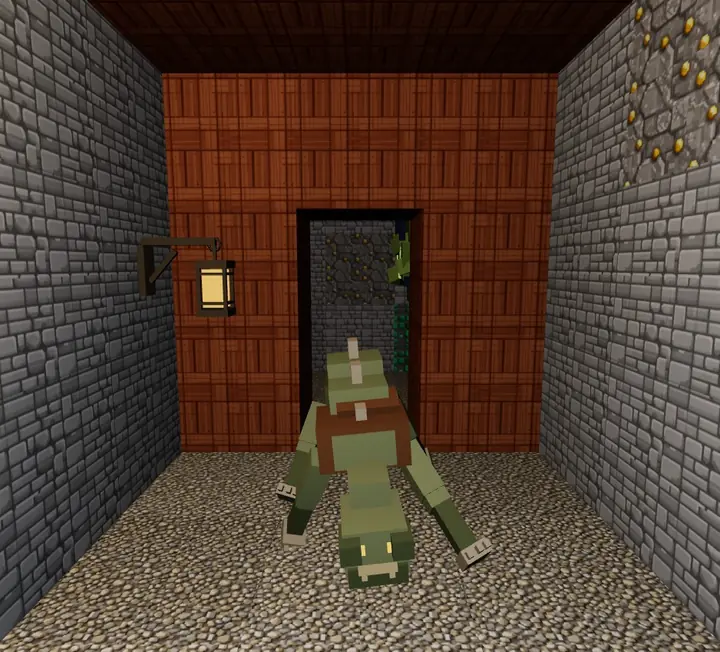
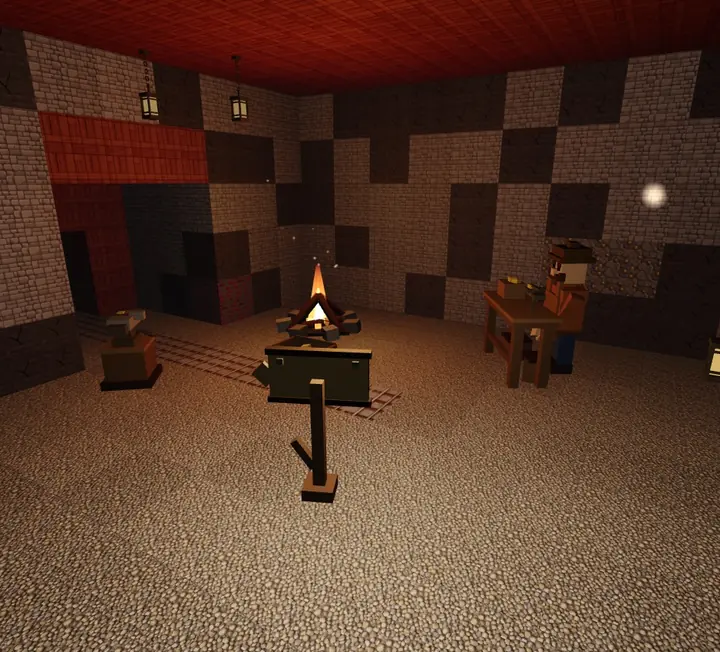
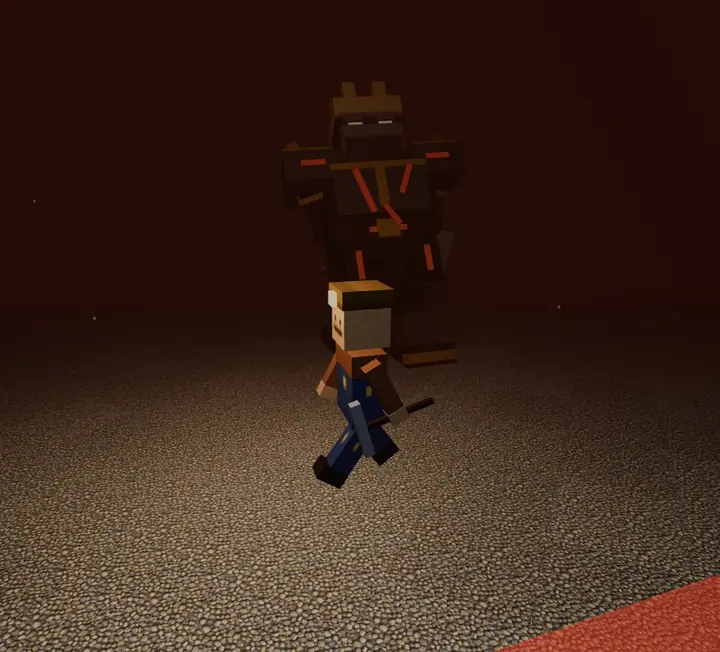
One hundred levels, twenty floors, a King at the bottom
The mine is laid out as twenty flat floors stacked over more than six hundred metres, each joined by a single long staircase carved into the rock. The Level counter at the top of the screen measures depth — six metres down equals one level, from 1 at the surface to 100 in the arena. Finding the staircase is what a descent is really about.
The galleries are not a maze for the sake of it: they are plugged with cave-ins. On the map, an apparent dead end is almost always a passage to reopen with the pickaxe — and mining always pays, since every plug holds at least one gold vein. Blind branches, meanwhile, often end in a treasure room where gold and ore are far denser than anywhere else.
At the foot of nearly every staircase waits a camp: the merchant, the Jeweller, the Mine Boutique, a campfire that restores your health while you stand still beside it, and a perimeter where no zombie ever spawns. Every camp you reach becomes a permanent checkpoint: on your next death you choose between the surface and the deepest camp you found. Three presets — Explorer, Miner, King — set your health and the size of the horde before you start; the world record is open to the last two only.
Six pickaxes, four pieces of jewellery, a crate of dynamite
Your gold buys your way up the ladder, and the ladder is a real progression: Bronze, Iron, Steel, Mithril, Adamant, Rune. Each tier hits harder and faster, but above all unlocks a family of rock: hardrock demands Steel, obsidian and diamond demand Mithril. The merchant also sells dynamite, healing, and three lantern upgrades — and it is the lantern that decides what you see coming.
And because the gems are laid out by depth — rubies in the first twenty levels, emeralds after that, sapphires around 45, diamonds from 70 — every piece you want pulls you further down. Dynamite opens a passage in a second and a half and draws no distinction between a zombie and you: keep your distance.
The Jeweller, the Mine Boutique and the mine companions
Every camp is a small village under the lanterns, with three shops to spend the gold you haul back up. The Jeweller is a proper underground jewellery shop: this is where you forge the Ruby Ring (damage), the Sapphire Necklace (health), the Emerald Amulet (speed) and the Diamond Crown (gold pickup) — three tiers each, costing more gems every time — and where the jeweller buys back, over the counter, the rubies, sapphires, emeralds and diamonds you will never set.
The Mine Boutique is the gold mine’s wardrobe: thirteen outfits to try on — hard hat, bathrobe, frilly dress, zombie skin… — each with its own armour value and bonus, laid out in Head and Body aisles. On top of those come three boss trophies money cannot buy: the Dragon helm, the Ossuary’s bone panoply and Auntie Slipper’s flip-flop are won pickaxe in hand, then worn like any other outfit.
The Companions aisle, finally, sells two mine pets: a Shiba Inu and a British Shorthair cat who trot along beside you through the galleries, take the stairs in stride and raise their voice — and a paw — when a zombie gets too close.
What lives down there
Three species of zombie share the galleries, each modelled in voxels and animated by hand. The Grinner shuffles about from the very first level: a lanky dead miner, dented helmet, staggering walk. The Crawler shows up around level 16 — low on all fours, head skimming the floor, far quicker than you expect. The Bloated arrives around level 30: it never strikes, it walks up to you, swells, cracks open and explodes. The ceiling spiders hunt from above the galleries and drop on whoever walks underneath — after a tell-tale shiver that leaves you a beat to step back.
They come out of the dark end of the corridor, more often the deeper you go, and never inside a camp. Any wound grants you nine tenths of a second of invulnerability, and no single hit can take more than 40% of your health: you can lose, but never in a split second and never without understanding why.
Three landings are barred by a boss of their own: the Gallery Dragon on floor 5, the Ossuary on floor 10, Auntie Slipper on floor 15. Each waits behind a door that seals once you step through, each leaves behind a wearable trophy — the Dragon helm, the bone panoply, Auntie’s flip-flop —, and the mine lift only ever serves the landings you have already cleared: the way back up is a ride, not a climb.
At level 100 the arena entrance collapses behind you. The Mine King fights in three phases, each written on his armour as it heats up with the damage: the telegraphed charge first, the summoning of his zombie miners below 66% health, the ceiling collapse below 33%. He is beatable — the charge can be dodged, dynamite hits him one and a half times as hard, and every phase change drops three hearts.
How to play
⌨️ On a computer
- WASD or ZQSDMove — QWERTY and AZERTY alike, arrow keys included
- MouseCamera — left click captures the cursor, hold right click for free look, wheel to zoom
- J or 1Mine, attack (left click works too)
- K, 2 or SpaceJump
- L or 3Throw dynamite
- ETalk to the merchant, use the bench
- MFloor map
- NMute
- EscPause, settings, save code
📱 On phone and tablet
- JoystickMove — it appears wherever your thumb lands, left half of the screen
- DragCamera — right half of the screen
- ⛏Mine or attack — becomes 🛒 in front of the merchant
- ↑Jump
- 🧨Dynamite
- 🗺Floor map — with sound and pause, at the top of the screen
- Multi-touchRun, aim and swing at the same time
The history of gold mines in Europe
At Las Médulas (León, Spain), the Romans dug the largest open-pit gold mine of their Empire using the hydraulic technique known as “ruina montium”; the site is now a UNESCO World Heritage Site.
Dolaucothi, in Wales, is the only known Roman gold mine in Great Britain.
Salsigne, in the Aude (France), was historically one of the largest gold mines in Western Europe, until it closed in 2004.
Today, production is concentrated in Scandinavia: the Kittilä mine in Finland is generally cited as Europe's largest primary gold producer.
Sweden also hosts major operations, notably around the Boliden region.
Frequently asked questions
Is Minedor really free?
Yes, completely. No account to create, no ads, no in-app purchases, no cookies and no trackers. You open the page, you press Play, you play.
Do I have to download or install anything?
No. Minedor runs in the browser, on any recent WebGL-capable browser, on desktop as well as on a phone. You can add it to your home screen as an app (PWA) if you like, but that is never required to play.
What language is the game in?
English or French — your pick. The flags at the very top of the page set the site AND the game: choose English and the whole in-game interface is in English — HUD, floor map, shop signs, pause menu and saved games. You can also switch mid-run from the pause menu, without losing your progress.
How many levels and floors does the mine have?
Twenty flat floors, each joined by one long staircase, and the King's arena at the very bottom. The Level counter measures depth: six metres down equals one level, from 1 at the surface to 100 in the arena. A camp with three shops waits at the foot of nearly every staircase — fifteen in all; floors 5, 10 and 15 hold a boss landing instead.
How do I play on mobile?
A joystick appears wherever your thumb lands on the left half of the screen; dragging on the right half turns the camera. Three buttons sit bottom right: ⛏ to mine or attack (it becomes 🛒 in front of the merchant), ↑ to jump, 🧨 for dynamite. Map, sound and pause are at the top of the screen. Everything is multi-touch, so you can run and swing at the same time.
Does the game work on an AZERTY keyboard?
Yes, with nothing to configure. ZQSD and WASD both work, so do the arrow keys, and M opens the map even when the operating-system layout does not match the printed keycaps.
How do I avoid getting lost in the galleries?
Press M (or the 🗺️ button) for the floor map: the whole layout shows dimmed, visited areas light up, your own tunnels appear in blue and every cave-in is marked with a cross. The compass at the top of the screen does not point as the crow flies: it follows a route computed through the galleries and shows the distance actually left to walk.
How do I defeat the Mine King?
Come down with a Steel pickaxe at the very least, dynamite in stock and health to spare — the brazier on the threshold, just before the arena, heals fast, but the entrance seals behind you. The King fights in three phases: first the charge, always preceded by a wind-up, so step aside at the last moment; below 66% health he summons zombie miners; below 33% he brings the ceiling down on marked patches of ground. Dynamite deals him one and a half times normal damage, and every phase change drops three hearts.
What happens when I die?
The run ends and its score is tallied, but you do not start over: gold, gems, pickaxe, jewellery, dynamite and lantern all carry over. You restart from the surface or straight from the deepest camp you have reached.
Is my progress saved?
Yes, automatically, in your device's local storage — nothing is sent to a server. The pause menu also shows an export code you can copy to move your progress to another device, and a field to import it back.
Can I play offline?
Yes. After your first visit the game is cached and starts without a connection. You can also install it as an app from your browser. Only the online record display needs a connection.
What is a gold mine?
A gold mine is a deposit worked to extract gold-bearing ore, either in open pits or through underground tunnels. In Minedor, you head down pickaxe in hand into a 3D mine to gather gold and gems while avoiding its least friendly residents.
Why is the game called Minedor?
Minedor is a contraction of “mine d’or” — French for gold mine. The game has you dig the Gold Mine, a 100-level voxel mine where gold and gems pay for pickaxes, jewellery, outfits and companions. The domain name minedor.be simply reads “gold mine”.
Are there shops in the game?
Yes, three per camp: the merchant (pickaxes, dynamite, healing, lanterns), the Jeweller (forging rings, necklaces, amulets and crowns, and buying gems back over the counter) and the Mine Boutique (outfits, boss trophies and companions). Boss floors add a vending machine in the antechamber on top.